EandE
Games
EandE
Games
  • DevLog
  • Games
  • About
  • Resources

I have a new website!

6/14/2015

0 Comments

 
... and  you're on the old one. Click here to be redirected!

Picture
0 Comments

My First Ludum Dare: Her Majesty's Apathy Bomb

4/21/2015

0 Comments

 
Picture
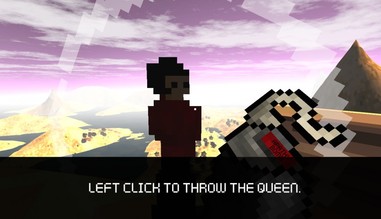
Firstly, here's the game, if you want to get right to it.

Ludum Dare is an enormous online game jam that happens a couple times a year. This most recent one (Ludum Dare 32) was the first one that I actually completed a game for, and I'm quite happy with the result.

The theme for this jam was "An Unconventional Weapon", and I'm not all that keen on making games that have a lot of violence in them, so I picked a weapon that wouldn't actually hurt anyone. The apathy bomb was born, which, as you can probably guess, affects emotion and motivation.

From here, I had the idea of borrowing structurally from The Stanley Parable, an excellent game which I highly recommend wherein the game plays with the narrative and storytelling opportunities that arise when the narrator and the player disagree.

The game came together fairly quickly after that.
Picture
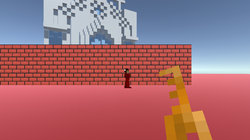
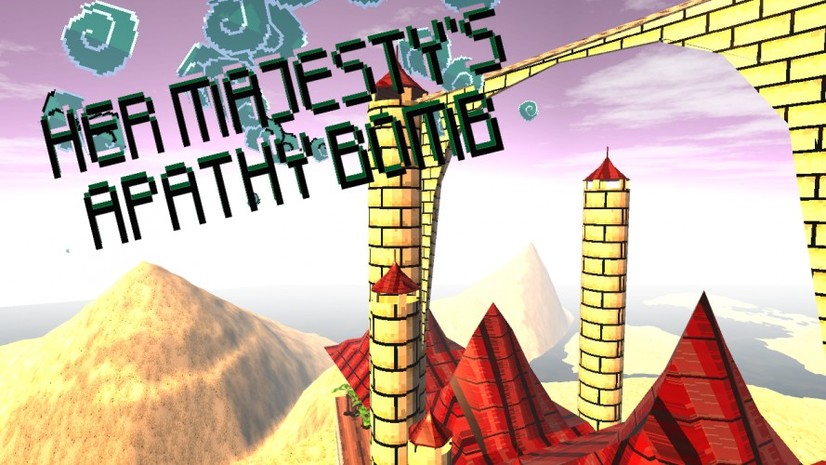
An early concept shot, done just an hour or two into the jam. Don't bother trying to find the key - it didn't make it into the final version.
Picture
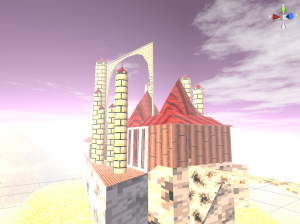
I just love that huge walkway along the top. Yes, you can walk up there in the game.
It's a good thing, too, because I chose to submit this game to the competition. Ludum Dare is broken down into two categories, the competition and the jam. The jam is 72 hours long, you can work in teams, and you can use pre-made assets - the game itself just has to be original. The competition is a bit tougher, as it has a 48 hour time limit, you must work solo, and all creative work (including 3d models, sound, etc.) MUST be created in that time frame (with the exception of using third party engines or libraries, as long as they're publicly available).

Needless to say, this makes things rather difficult, but I was excited for the opportunity to create something polished in a short amount of time.

My favorite part of this game is my narration (which I suppose is good, because it's pretty central to the game). Besides being a game developer, one of my dreams is to be a voice actor, so this was a pretty awesome meeting of worlds.

The hardest part was the 3d modeling, which I haven't been doing for very long and find very difficult. Take a look at this picture of palace, though - it's a little rough, but I didn't know I could do even that.
I feel like I captured the tone of The Stanley Parable really well, so I think it works well as an homage. But, I also feel like it's different enough that you can still enjoy it without having played The Stanley Parable. Hopefully that's true ... Have fun finding the 6 different possible endings.

In any case, I'm anxious for feedback. Please let me know what you think either on my itch.io page, the Ludum Dare page, on my Twitter, or here in the comments.

Thanks so much for playing! You can also see the other games that were submitted here! Yep, that's right, there are nearly 3,000 of them.
Picture
0 Comments

GameDev Resource Pick: Low-poly Human Models

3/13/2015

0 Comments

 
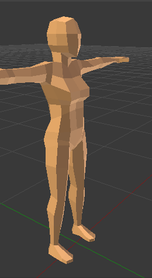
These male/female low-poly human models are excellent and have criminally few downloads. Improvements upon these originals, these new and improved Blender models have basically everything you need:
  • fully rigged, and the rig will play perfectly with Unity when you import it
  • the two models are on separate layers, so it's very easy to grab the one you need
  • built-in animations (which I haven't personally used yet)
  • easily expansible and editable - make them taller/fatter/children (maybe all three?!)
They're not textured right now, but if you've used Blender before, some quick UV mapping will fix that. I personally recommend setting the edges to sharp and throwing an ambient occlusion map on 'em. With a little vertex tweaking, you could end up with some awesome low-poly models like those used in Aer (check the screenshot below for inspiration).

If you need a Blender primer, check out this tutorial on KatsBits.
If you need some help with ambient occlusion and sharp edges, check out this tutorial on tuts+.

Going, going, (poly)gon.
Picture
Picture
Aer, by Forgotten Key Studios, is still in development, but GOSH does it make polygons look pretty.

0 Comments

GameDev Resource Pick: bfxr

3/4/2015

0 Comments

 
Game sound effects are hard. As someone who's tried recording sound effects with a crappy microphone (including making laser blast noises with my mouth), there came a time when I sat down at my computer and just started at, puzzling over how I could convince it to make the sounds I wanted for my game.

It wasn't until several years later that I found bfxr. This is a marvelous little free tool made by increpare, based on an older program made for a Ludum Dare called SFXR.

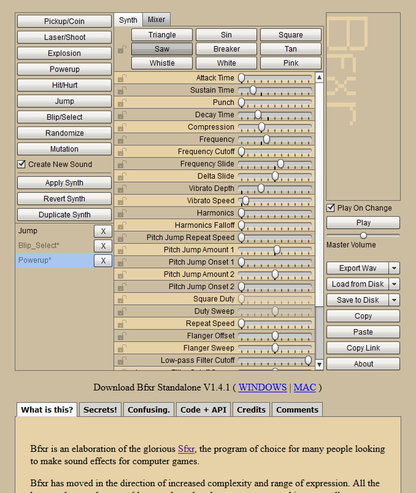
It has a dozen or so preset sound buttons, like jump, coin pickup, and explosion. Every time you click one of these, it randomizes innumerable confusing settings to bring you a slightly different clip each time. You can then, with the click of a button, export the generated sound to a .wav file. Easy-peasy, as they say.

You can, of course, tweak that aforementioned plethora of settings to get the sounds you be exactly what you want. I've been using bfxr on and off for several years, and most of them are still a mystery to me, but that's okay. You'll want to try out the mutate button a good amount, and watch how the sliders change. Then, slide a slider at a time and see what happens. Be aware, though: the sliders are very sensitive and it's easy to get your sound irretrievably unrecognizable. Make sure to save sounds you like before messing with them.

The end result of all this, of course, is some pretty nifty lo-fi 'bleep-bloop' sound effects to use in your game. I don't necessarily recommend using this if you're making a fully 3D RPG or realistic FPS, but you still night be able to wrangle some button click sounds out of it even if you are.

However you use it, the takeaway here is that bfxr empowers you to make sounds yourself. They're entirely unique, and an excellent starting place for budding sound designers or game developers who don't know their way around a microphone (like me) or who can't find the exact clips they need on a site like freesound.org or freesfx.co.uk.

So, without further ado, check it out now: BFXR!
Picture
Just look at all that bleep-bloopin' goodness. Available on the web immediately or as a downloadable program for Win/Mac!
0 Comments

My First Demo Night - a story of abandonment

3/2/2015

0 Comments

 
Picture The curse'd Idea Fairy (click the image for the original comic by TheMeatly)
I've abandoned another project. That is to say, the Idea Fairy has won this round: I've shelved the game I've been working on for the last few months and begun something new.

While I'm excited about my new game (
and why wouldn't I be? I've only been working on it for three days), I figured it's worth taking some time to figure out what happened to Strange Gravity, and why it's back on the shelf again.

A large part of this is due to a demo night here in Boston that I took my working build to. And that’s not to say that the evening even went badly. Here's what happened.

I'd taken things I'd learned from watching people play the original 7DFPS build and revamped many features, including the logic behind how spores are generated, transferred, and destroyed (which is quite a lot of the gameplay). My improved logic was considerably faster and more efficient.

Also improved was the tutorial, which I saw many people just skip in the original game. I made out much shorter, which was a good thing. I still counted on people walking up and reading placards I'd set up, which was not a good thing. Also not a great idea: setting the tutorial on a flying disc above the ocean with no invisible walls or logic to handle falling INTO the ocean. In my tests, of course, I'd never fallen off the platform once. This didn't stop a good 40% of players at the demo night tumbling helplessly into a low-poly abyss just moments after the game began.
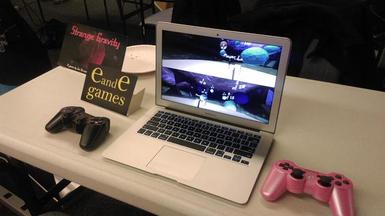
PictureMy modest table setup at Playcrafting Boston Winter Expo. Note the tiny screen and even tinier split screen! (not pictured - the 8-foot tall banners and 50-inch TVs other devs brought in)
Aside from that, though, I learned that I hadn't actually improved the tutorial at all. People had just as much trouble following the 5 simple instructions I'd put on the sign as they'd had meandering through my museum tutorial from the original version. Now, I'm assuming that I didn't randomly get a sampling of players incapable of playing through any given tutorial, so the fault was clearly on my end. I'm currently chalking it up to confusing layout, overly-small instructional text that wasn't drawn directly on the screen, not incorporating learning better into the actual gameplay, and the fact that I was doing a multiplayer-only demo (tutorials work better for single players, I guess).

That being said, I still don’t know how to make a tutorial WELL, especially for a game that has some relatively complex mechanics. I guess I should go back and play some old favorite games, and NOT skip the tutorials because I already know how to play them. If you know any games that have excellent multiplayer tutorials, particularly first-person games, please let me know on Twitter. 

So, the tutorial was a major stumbling block for first-time players, which was especially frustrating because I felt like it was so much better. But, beyond that, a note about design: the structure of the game is that of a top-down RTS, like Galcon or Phage Wars, but in the first person perspective. I knew from the single-player prototype that the format COULD WORK in first-person, but I learned this at the demo night: 

It doesn’t work SUPER well. 

Especially in multiplayer. The battles quickly became very hectic, with swirling cameras and little player awareness of what was going on. I can think of a few reasons why this might be, including poorly-thought-out level design and the very small screen that I was testing on, but it was discouraging nonetheless.


Now, I got a good amount of feedback, and a lot of people said that it had 'potential', which was very nice of them. But the one piece of feedback that I got which really hit home for was this: 

“When are you going to start making story-driven games again?”
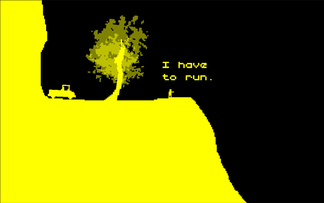
PictureIt's Not About the Aliens screenshot. If you do go play it by clicking the image, know this: the controls are bad. I know this, and I'm sorry.
This came from the awesome David Cherepov, who played, enjoyed, and gave me tons of great feedback for my favorite game that I’ve developed, It’s Not About the Aliens.

This comment, as well as my other experiences at the demo night, brought me to an important conclusion: I’m not making the type of game that I really want to play.

I mean, sure, if Strange Gravity were a completed game, with a fully fleshed-out story mode and a multiplayer mode, I would play it and enjoy it. I would not, however, play the multiplayer mode. I don’t really like multiplayer. I was mostly working on implementing this feature because I felt like it would fit for the game style, not because I thought it sounded fun. Thus, a large chunk of my recent developer energy went into a part of the game that I wasn’t super interested in.

One of my main goals was still accomplished, though, which was learning how to do more stuff. I learned tons of stuff I didn't know, and that’s half of why I do what I do. The other half, of course, is ending up with a finished product, which was not the case here.

I still think that there’s a lot of 'potential' in the game concept, and I think that I have a solid enough code base that I could go back to it and begin developing the single player campaign. (Someday ... maybe ...)

At present, though, I’ve begun work on something that I actually DO want to play (a story-driven, 2D platformer), and I think that’s serving me well for the time being.

Have you ever lost a battle with the Idea Fairy? What happened to that old project?

0 Comments

GameDev Resource Pick: BeepBox

2/18/2015

1 Comment

 
I'm not particularly musically inclined. That being said, I love music and games that use music well.

I've experimented with numerous online music composition programs (particularly ones that do a lot of the work for you), and I want to draw you attention today to BeepBox.

It's one of the most robust chiptune music composition programs you'll find that also manages to stay user-friendly and easily approachable.

You can, like me, just start clicking stuff and, as if by magic, it'll probably sound good. Keep layering and adding to it and you'll have a pretty cool song pretty quickly.

If you actually have musical talent, you can change the key, rhythm, scale, as well as various instrument settings, and make a pretty awesome, complex song that sounds like it's straight out of one of the great chiptune albums of yore (like the VVVVVV soundtrack, for example).

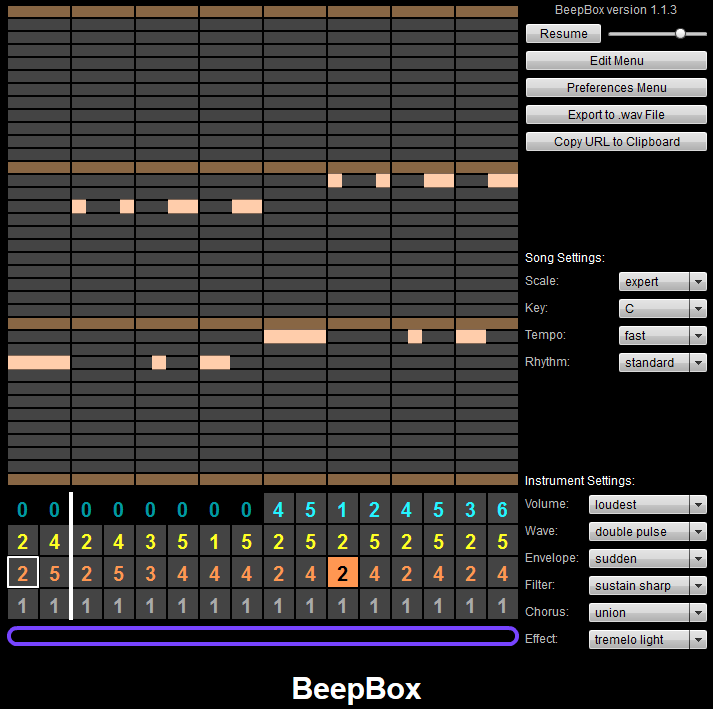
All of the song data is stored in the URL, so all you have to do to save it is bookmark the page once your song is created. PRETTY sweet, to say nothing of the remarkably easy .wav export button.

Beyond that, it has built in Twitter functionality. Even if you don't use Twitter, you can take a look at the feed of people sharing their songs, and, if you're not feeling all that confident about your own creations, you can reach out to someone who is and ask for permission to use their songs. I've done this in the past and people have been very willing to share their work (provided I wasn't making money off of them, which I wasn't).

So, give it a try. Share your songs with me on Twitter or in the comments! Here's one I whipped up in a few minutes to get you started.

Quick shout-out to John Nesky for making such an awesome piece of software!
Picture
The BeepBox interface (not my song, though - click the picture to find the awesome song by Connor McHarney)
1 Comment

GameDev Resource Pick: Random Sprite Generators

2/6/2015

0 Comments

 
Every now and then, I won't be feeling very creative. Try as I might, any game development work I try to do gets nowhere.

At times like this, I try to find some inspiration. Oftentimes, this means playing an hour or so of a great game (recently it's been FRACT OSC). But sometimes, all it takes is seeing some art that gives me a new idea.

Now, coming up with a new idea isn't always a good thing, especially if it means your other projects fall by the wayside. But if I see something that gives me a cool game idea, and I spend an hour or so prototyping it out, then I'm back in the groove. And then (hopefully!), I can get back to what I actually want to work on.

Some art that's gotten me thinking lately are these two random sprite generators: this one by
Boris van Schooten (of Tomatic Games) and this one by Carl Olsson (AKA Uninhabitant).
They're both really fun for different reasons, but here's a quick outline of the differences.
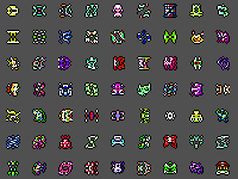
  • The sprite generator by Tomatic Games allows generation of tiles or 10x10 sprites (or 12x12, including black outline). These sprites also often include several frames of animation, which is super awesome.
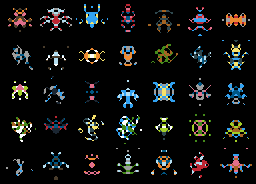
  • The sprite generator by Uninhabitant is far more robust - you can control the size of the sprites generated, the grid size to generate them in, the color palette, and tons of randomization tweaks that I barely understand. You can really get them to look just the way you want. The downside, of course, is they don't animate themselves. 
Picture
By Uninihabitant
Picture
By Tomatic Games
Take a look at both of them, and just see if they don't, for lack of a less-gross phrase, get your creative juices flowing. And, heck, you might even get a solid game idea out of one or both of them. Or perhaps a character design concept. Who knows?

Do you know of any other random image generators? I'd love to see them! Share the love! Let me know in the comments or on Twitter!
0 Comments

Preparing for Your First Demo Night

2/4/2015

0 Comments

 
When I saw that the Playcrafting Boston Winter Expo (an open-form demo night coming up in Feb. '15) was still taking submissions, I decided to enter. The question then became: what game do I submit?

I have a number of projects that I'm working on at any given time, most of them excellent ideas that are far too large in scope and destined to be forever unfinished. I knew the chance to show off a game to a largish number of people would be an excellent motivator to get some real work done on it beforehand, but what game to choose?

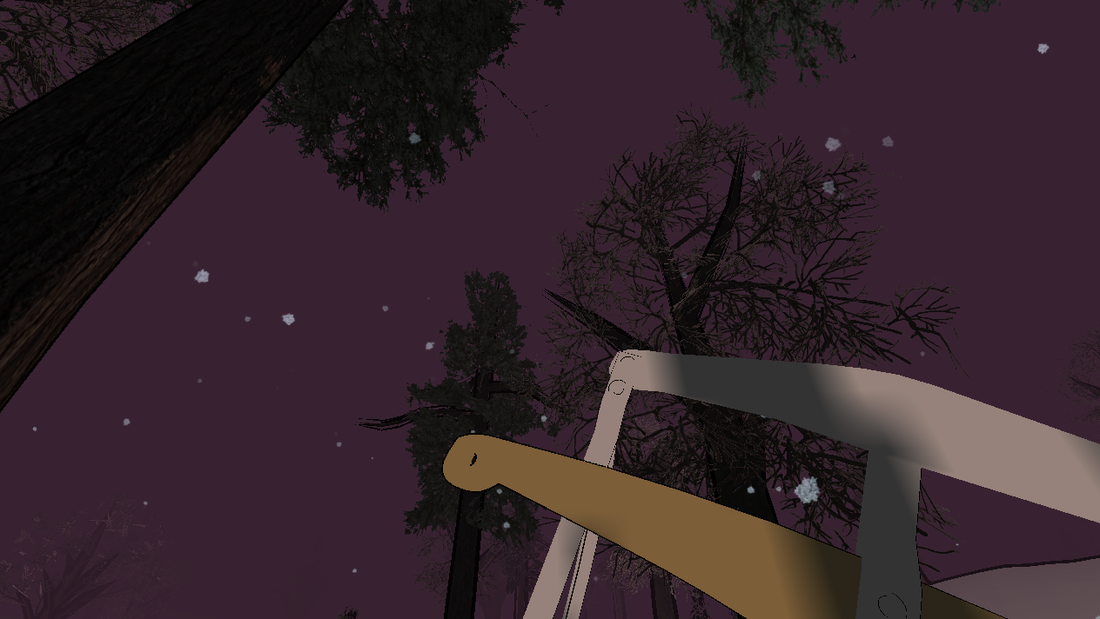
My first person sledding simulator I'd been working on for a few days? One of the several untitled, bare-bones prototypes that I started making for friends in the holiday season? My long-abandoned third-person action-adventure, Spider the Fox? My well-received, but unpolished and tedious, 7DFPS entry, a "first-person-strategizer" called Strange Gravity? You can play the current version of it here, if you're so inclined.

Picture
My untitled, unfinished sledding simulator. Gosh, purple is really the color of the sky in my mind, isn't it?
I ultimately decided to submit this final choice, Strange Gravity, for two reasons:
  1. It is playable from start to finish, which, while not strictly necessary for a demo night, means that it has functional gameplay that I could actually use feedback on, and ...
  2. A YouTuber who did a playthrough was very complimentary (though I can't remember which one :) ), and said he hopes I turn it into a full game. In my mind, it already was a full game, but I took that as meaning that there was room for expansion.

I submitted it a week ago and heard back that I got a table a few days ago. Over the course of the three-day weekend (thanks to a snow day from work), I have done, gosh, maybe 25 solid hours of work on the game - not including the feverish brainstorming I always seem to do for a half hour or so every night after I turn off my bedside lamp.

With these hours, I've been able to completely rewrite a lot of the inefficient code underlying the main gameplay, including leaving room to insert local multiplayer functionality and the groundwork for a considerably more varied main campaign (with multiple opponents and several game styles). I'm thrilled with the work that I've done, and I still have several weeks to continue improving.

And if I'd chosen a different game for the demo night? Would I have gotten the same amount of work done had it been accepted?

Probably, but I have a distinct advantage against my own inefficient work ethic in this case: because the game was already functional and, in my opinion, rather pretty, I've been able to stop myself from pouring hours into needless beautification and ACTUALLY work on improving the gameplay and structure.

Picture
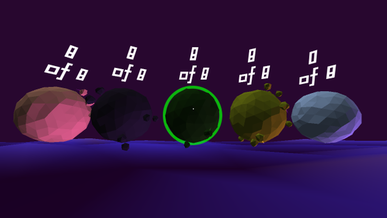
Two new planet types and a completely different code structure under the hood
What can you take away from this?
  • Showing off a game is a great way to actually make yourself work on it beforehand.
  • Keep an eye out for local demo nights and meetups in your area. They're a great way to network and show off work, and who knows - your 'only okay' game might have a chance against other submissions.
  • Know thyself (and how much you procrastinate - working on a project with a few steps done already is great way to bypass some slacking)
  • If you go back to an old project, be prepared to re-write most of your old code. At least, if you're like me and rapidly improving your coding skills, you'll look back and cringe at your old scripts, if you can even read them at all. It can be painful, so be prepared.

But, of course, here I am giving advice, and I haven't even been to my first demo night yet. Here's hoping it goes well!

Have you shown off your game at demo nights before? Other venues? How did you prepare?
0 Comments

GameDev Resource Pick: Catlike Coding's TutorialsĀ 

2/3/2015

1 Comment

 
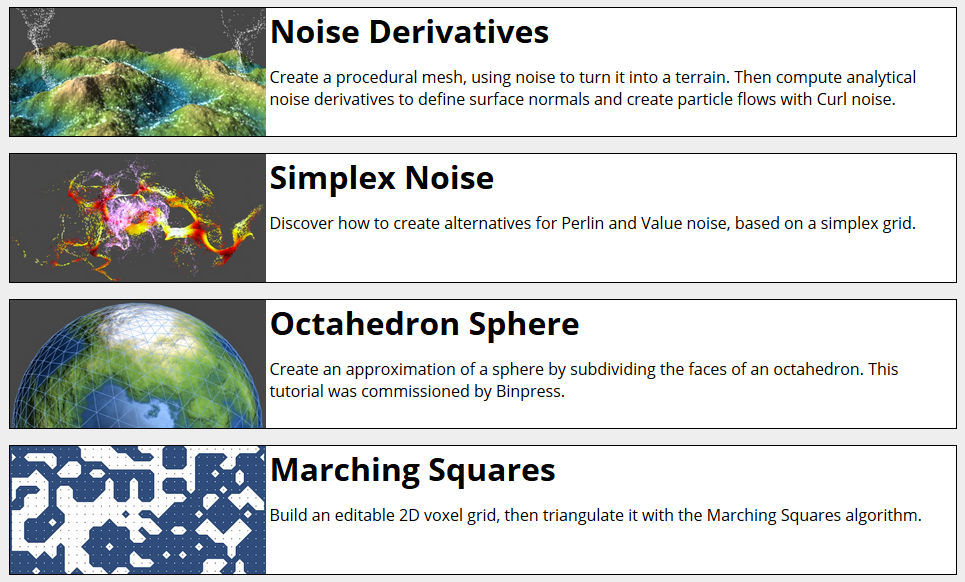
Take a good, hard look at this list of Unity tutorials by Jasper Flick: http://catlikecoding.com/unity/tutorials/

There are some really interesting tutorials here, and what's more, they're really fun. I can look at the thumbnails for each one and imagine an entire game based on the mechanic they teach.

They're meticulous and methodical, so be prepared to spend a few hours on each one, but, dang will you be glad you did.

They get into fairly complex topics, but don't let that scare you off. I worked my way through Noise and am halfway through Noise Derivatives, and, to be honest, I understood about half of what I was doing. Maybe a little less! But, as I said, they're excellently notated and include project files for multiple steps throughout the process, which is very useful if you can't get something to work quite right.

And besides, if you're trying to improve your coding skills, what better way to do so than pushing yourself out of your comfort zone and ending up with, say, a procedurally generated ocean surface to boot?

If you've still not had enough, take a look at NumberFlow as well. Also by Jasper Flick, this is a free (for non-commercial use) Unity plug-in that does some awesome procedurally generated textures for you in real-time. How cool is that?!
Picture
Just a few of the really cool tutorials. I mean, just LOOK at those thumbnails! ... Do I seem a little too excited about these thumbnails?
1 Comment

GET MOVING: Motivating Yourself to Work on Your Personal Projects

1/30/2015

0 Comments

 
If you're like me, you have some personal projects that you're working on, in addition to whatever you do to make money.

If that's the case, you're pretty lucky, because you have gainful employment and (some) time to work on your own stuff. You may find, however, as I have, that it's not always easy to motivate yourself to work on these other projects, especially when you're just scratching the surface of Dark Souls 2. (And let me tell you, being a mage is very fun.)

So, if you're like me even more, you probably are working to find ways to motivate yourself to get going with that sweet, sweet, creative outpouring.
Here's a list of the top ways I motivate myself to make video games in the little free time I have:
  1. Accountability
  2. Time Limits
  3. Anticipation of Finished Product
Let's take a quick look at each of those.

1. ACCOUNTABILITY

ACCOUNTABILITY is the big one. If I have someone who's expecting me to finish what I've started, I'm about 10 times more likely to actually work on it AND finish it. Even if this someone is just a co-worker I told about my most recent game, that counts. (This can be a bad thing, too, if you're, say, working for an overbearing boss or some such. Never having developed professionally, though, I can't speak to that intelligently.)

2. TIME LIMITS

TIME LIMITS are closely tied to accountability. But, essentially, they're a way for me to actually work on all parts of the game to have something actually playable in a reasonable amount of time. (See: minimum viable product)

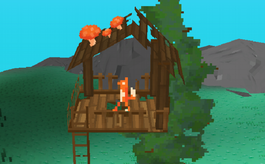
My tendency is to spend a bunch of time beautifying my games before they're even playable. Take a look at this screenshot from my great unfinished game Spider the Fox. Or this gif. Lots of pretty stage dressing ... mediocre, limited gameplay. In my experience, (and I think in a lot of other developer's experience as well) game jams with short timeframes are an excellent way to actually finish things, especially if you're not great at setting reasonable time limits for yourself. Or if you can't stick to the ones you DO set ...

Picture
Lots of stage dressing, little gameplay

3. ANTICIPATION OF FINISHED PRODUCT

If accountability and time limits are the main things that get me to work on games, ANTICIPATION OF FINISHED PRODUCT is the main reason that I want to make games. Yes, there's the thrill of creation and the joy of learning new things, as well as the sense of satisfaction after I code a particularly elegant function, but, at the end of the day, it's about being able to say, "Here! I made this thing! Let it entertain you! And let me watch!"
"Here! I made this thing! Let it entertain you! And let me watch!"
Any one of these is potentially enough to get me to actually sit down and do some work. But in the absence of any of these, you better believe I'll be back in Dark Souls 2, trying to kill some hovering knight or something.

I'd love to see some comments about what other people use as creative motivators. Do mine work for you? Will yours work for me?


0 Comments
<<Previous
    This is my old GameDev website. Click here to be redirected to my new one!

    Picture

    Archives

    June 2015
    April 2015
    March 2015
    February 2015
    January 2015

    Categories

    All
    Gamedev Resources
    Gamedev Tips
    Gamedev Updates

    RSS Feed

Powered by Create your own unique website with customizable templates.